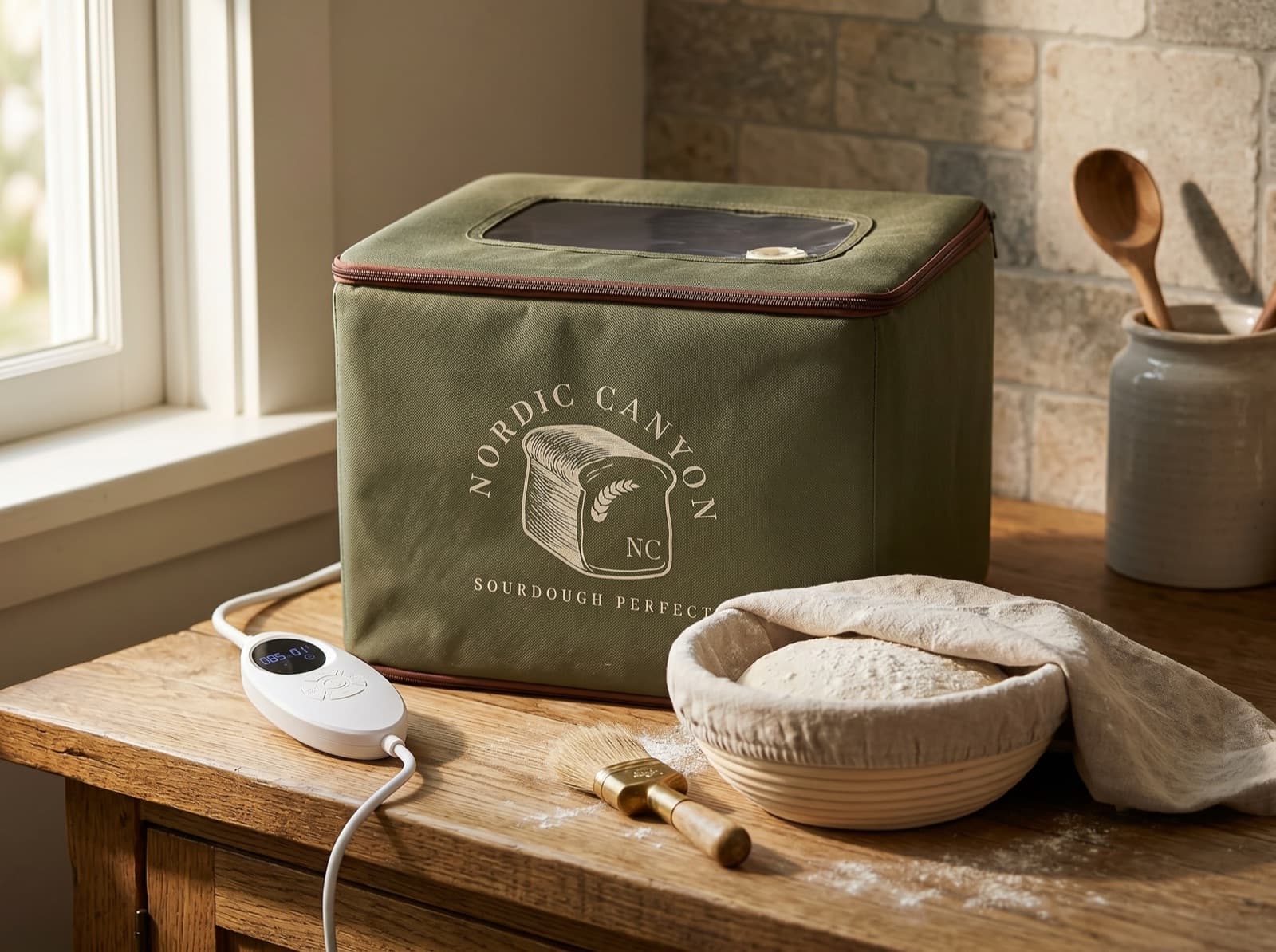
Sourdough proofing is not mysterious. It is physics.
Your dough is a living system: wild yeast and bacteria consuming sugars, producing CO2 and organic acids, building structure. Every one of those processes has a temperature preference, a humidity range, and a time window. Get those three variables right and your bread rises correctly, flavors develop fully, and your crust has the structure to open beautifully in the oven.
Get them wrong, and no amount of technique rescues the bake.
The Two Stages of Proofing
Bulk fermentation is the first rise. You do it at room temperature (or controlled temperature) in your bowl or container, immediately after mixing and before shaping. This is where most of the fermentation activity happens: the dough grows, the gluten network strengthens, the flavor develops.
Final proof is after shaping. You place the shaped loaf in a banneton and either proof it at room temperature for 1-3 hours, or cold-retard it in the fridge overnight (8-16 hours).
Sourdough proofing is not mysterious. It is physics.
Temperature: The Primary Variable
The single most important factor in fermentation timing is temperature.
At 75-78 F, your bulk fermentation typically runs 4-6 hours for a standard sourdough with 20% starter. This is the range most recipes are written for.
At 68-70 F, the same dough needs 7-10 hours. The yeast and bacteria work slower at lower temperatures. The result is often more complex flavor because the acids have more time to develop.
At 80-82 F, bulk fermentation may complete in 3-4 hours. This is workable but requires closer watching. Overfermented dough collapses rather than rises.
Above 90 F, you risk damaging or killing your wild yeast. Do not proof at high ambient temperatures without monitoring carefully.
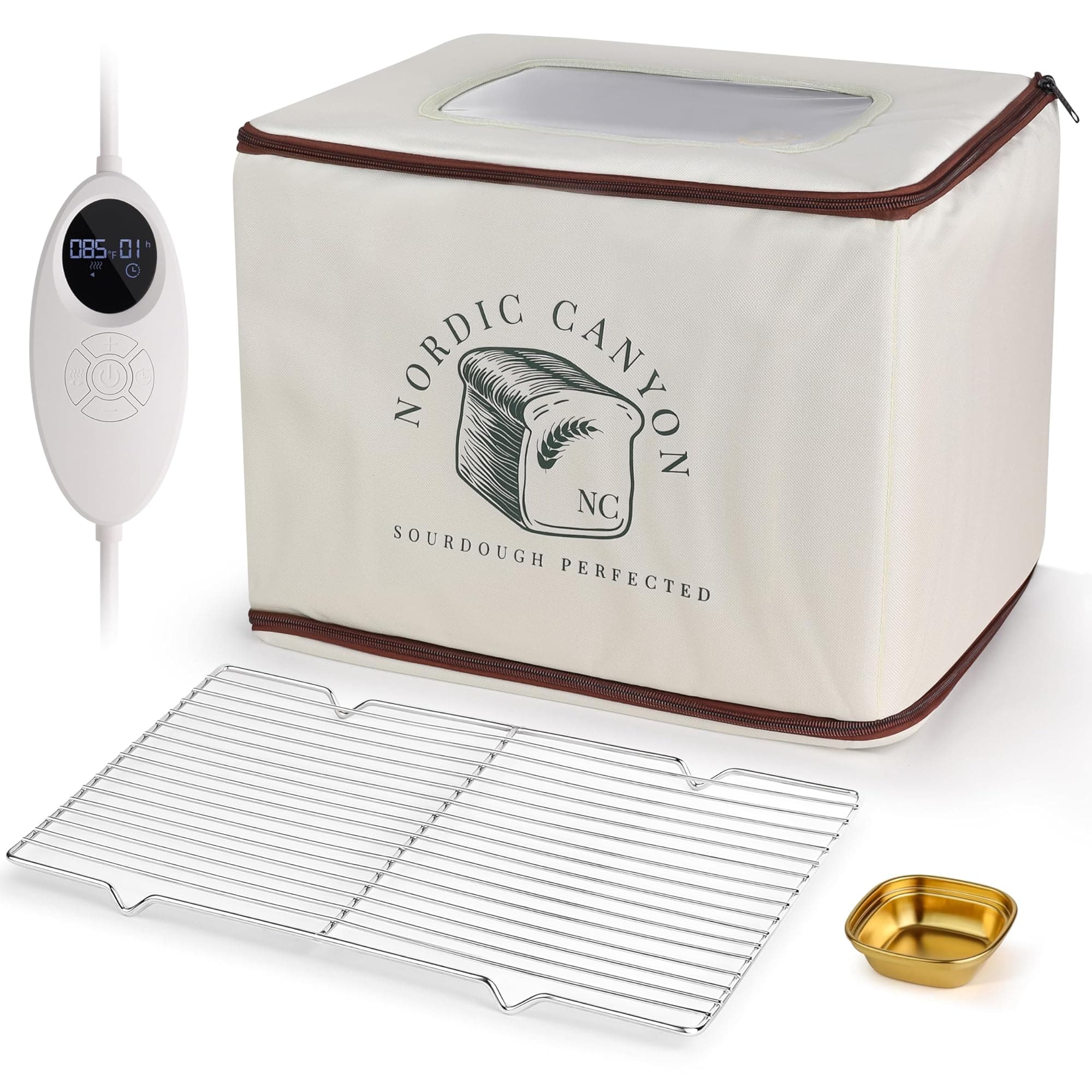
The Nordic Canyon proofing box covers 68-120 F. For sourdough proofing specifically, you will work in the 70-82 F range most of the time.
Humidity: The Variable Bakers Forget
Low humidity during bulk fermentation dries out the surface of your dough. A skin forms. That skin restricts the gas produced by fermentation from expanding freely, leading to uneven rise and a tighter crumb.
Target humidity is 65-80% relative humidity during proofing.
The proofing box water dish helps maintain humidity passively. Fill it before starting. The built-in hygrometer lets you monitor the environment and add water if the reading drops.
Cold Retard: When to Use the Fridge
Cold retarding your shaped loaf overnight (35-40 F, standard fridge temperature) slows fermentation dramatically while allowing flavor development to continue. It also firms up the loaf, making it easier to score, and sets the outer structure for better oven spring.
Most home bakers who cold-retard their shaped loaves get:
- More complex, tangy flavor
- Better oven spring
- Cleaner scoring (the cold dough holds its shape)
- Flexible morning bake timing
The Nordic Canyon proofing box does not replace your fridge for cold retard. Use your fridge for that stage.
Signs Your Dough Is Ready
For bulk fermentation: the dough has grown 50-75% in volume, the surface looks domed and bubbly (not flat or collapsed), and when you pull a small piece it stretches without tearing.
For final proof: the dough has increased in size, springs back slowly when poked (not snapping back at once and not staying fully pressed), and feels airy rather than dense.
Quick Reference
| Stage | Temperature | Time (approx) |
|---|---|---|
| Bulk fermentation | 75-78 F | 4-6 hours |
| Bulk fermentation (slower) | 68-72 F | 7-10 hours |
| Final proof (room temp) | 72-76 F | 1-3 hours |
| Cold retard | 35-40 F | 8-16 hours |
| Avoid | Above 90 F | Risk of damage |
Set your Nordic Canyon box to 76 F for bulk fermentation, fill the water dish, and set the timer for your expected window. Check at the lower end of your estimated time. Your bread will tell you when it is ready.